


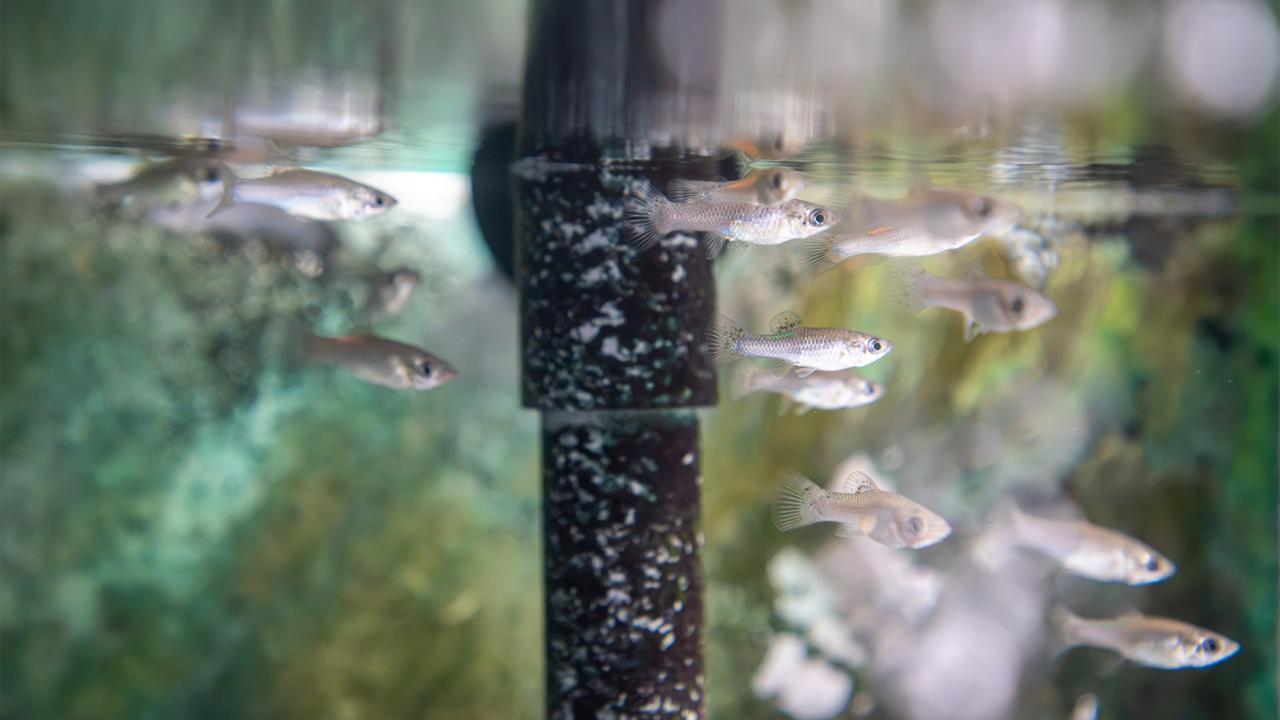
How Being Social Shapes the School—for Fish
Social Interactions Vary Even in Genetically Identical Fish
When they’re first born, baby Amazon mollies aren’t super social, but after about three weeks, something switches and they become socially attuned to their schoolmates. A new study led by researchers from the University of California, Davis, shows that groups of fish develop idiosyncratic group dynamics, even when the groups are genetically identical. Published in Current Biology, the findings offers new insight into how social interactions shape the development of group behavior.
“There is no other study that has this level of experimental control or ability to track animal groups so closely from birth,”said Kate Laskowski, an associate professor of evolution and ecology. “This lets us really get at the question: do otherwise identical groups develop in identical ways? And the short answer is no.”